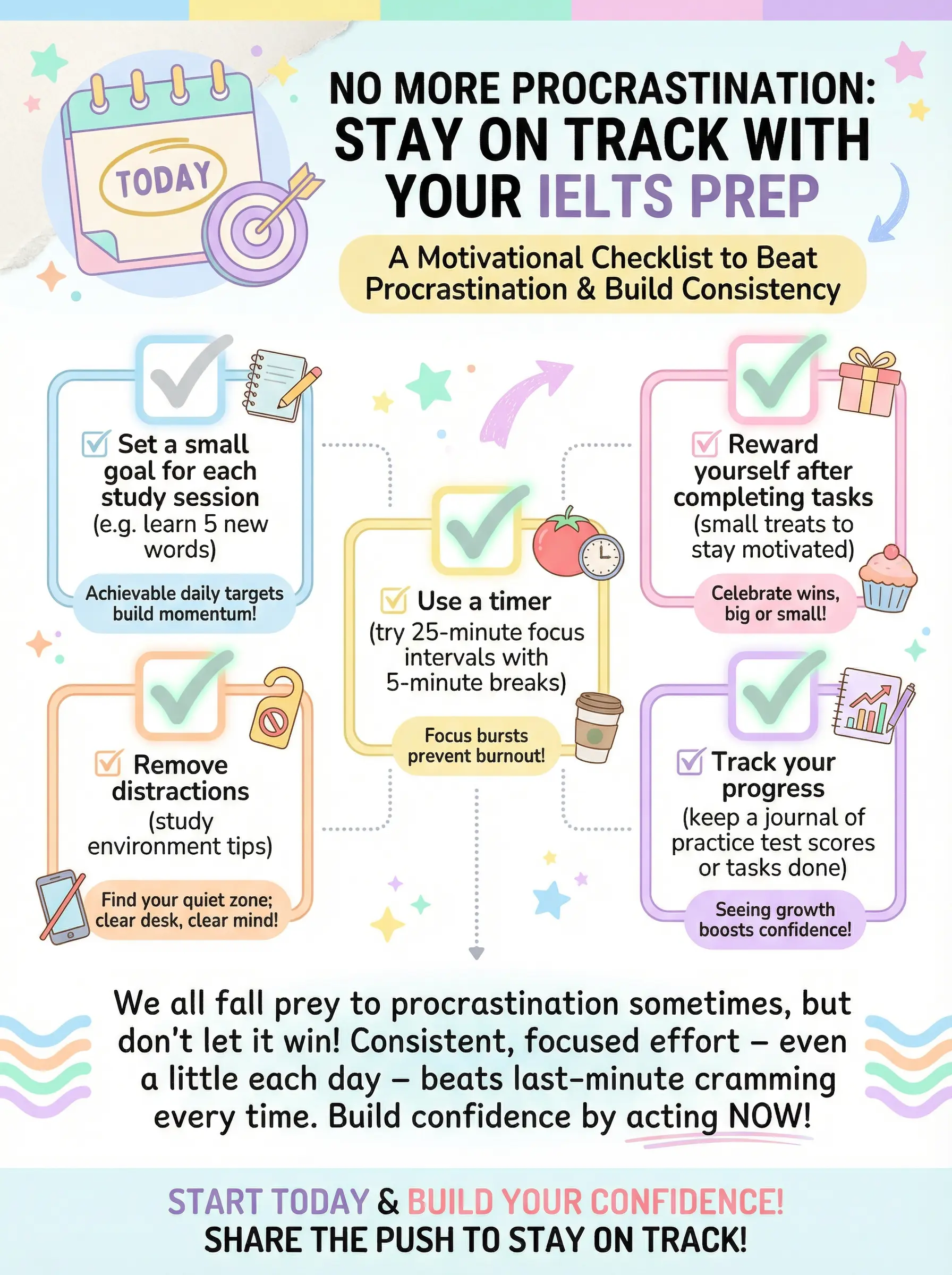
No More Procrastination: Stay on Track with Your IELTS Prep
No More Procrastination: Stay on Track with Your IELTS Prep
Preparing for the IELTS exam is a marathon, not a sprint. It requires consistent effort over weeks or even months. However, many students find themselves falling into the trap of procrastination—putting off study sessions until "tomorrow" or getting distracted by social media when they should be practicing writing tasks.
To reach your target score, you must understand the core principles of beating procrastination. It's not just about willpower; it's about creating a system that makes studying the path of least resistance. Here are strategic ways to stay on track with your prep.
1. Remove Distractions (Optimize Your Environment)
The first step to focused study is controlling your environment. If your phone is buzzing every two minutes, deep learning is impossible.
- •Digital Detox: Put your phone in another room or use apps like Forest or Freedom to block social media during study sessions.
- •Clear Workspace: A cluttered desk can lead to a cluttered mind. Keep only your IELTS books, notebook, and pens visible.
- •Quiet Zone: Find a quiet place where you won't be interrupted. If that's not possible, invest in noise-canceling headphones or listen to white noise.
2. Use the Pomodoro Technique
One of the main reasons we procrastinate is that the task ahead feels overwhelming. "Study for IELTS" sounds huge. "Study for 25 minutes" sounds manageable.
- •Set a Timer: Focus intensely for 25 minutes.
- •Take a Break: When the timer goes off, take a 5-minute break. Stretch, grab water, or walk around.
- •Repeat: After four cycles, take a longer break (15–30 minutes).
This method keeps your brain fresh and makes starting easier because you only have to commit to 25 minutes.
3. Set Small, Specific Goals
Vague goals like "improve writing" are procrastination traps. Specific goals give you a clear direction.
Instead of saying "I will study writing today," say:
- •"I will write one Task 1 introduction in the next 20 minutes."
- •"I will learn 5 new synonyms for 'increase' and use them in sentences."
Small wins build momentum. Once you tick one small box, you'll feel motivated to tick the next one.
4. Reward Yourself
Positive reinforcement is powerful. If studying feels like a punishment, you will avoid it. Associate completing tasks with small rewards.
- •Micro-Rewards: After a 25-minute session, enjoy a piece of chocolate or check your favorite app for 5 minutes.
- •Macro-Rewards: After a solid week of consistent study, treat yourself to a movie night or a meal out.
5. Track Your Progress
Seeing how far you've come is a great motivator. Keep a study journal or use a habit tracker.
- •Log Your Hours: Write down what you studied and for how long.
- •Track Scores: Keep a record of your practice test scores. Seeing your Listening score go from 5.5 to 6.5 is tangible proof that your effort is paying off.
- •Checklists: There is immense satisfaction in physically checking off a box. Create a daily to-do list and cross items off as you go.
Conclusion
Procrastination is often a symptom of fear—fear of failure or fear of the difficulty of the task. By breaking your preparation into small, manageable chunks and creating an environment that supports focus, you can overcome this barrier.
Remember, consistency is key in IELTS preparation. Twenty minutes of focused study every day is better than five hours of crammed study once a week. Start today, start small, and keep moving forward.
Check out our other IELTS resources and practice tests to help you achieve your target band score!
Next best action
Move from strategy to score gains with a targeted practice step.