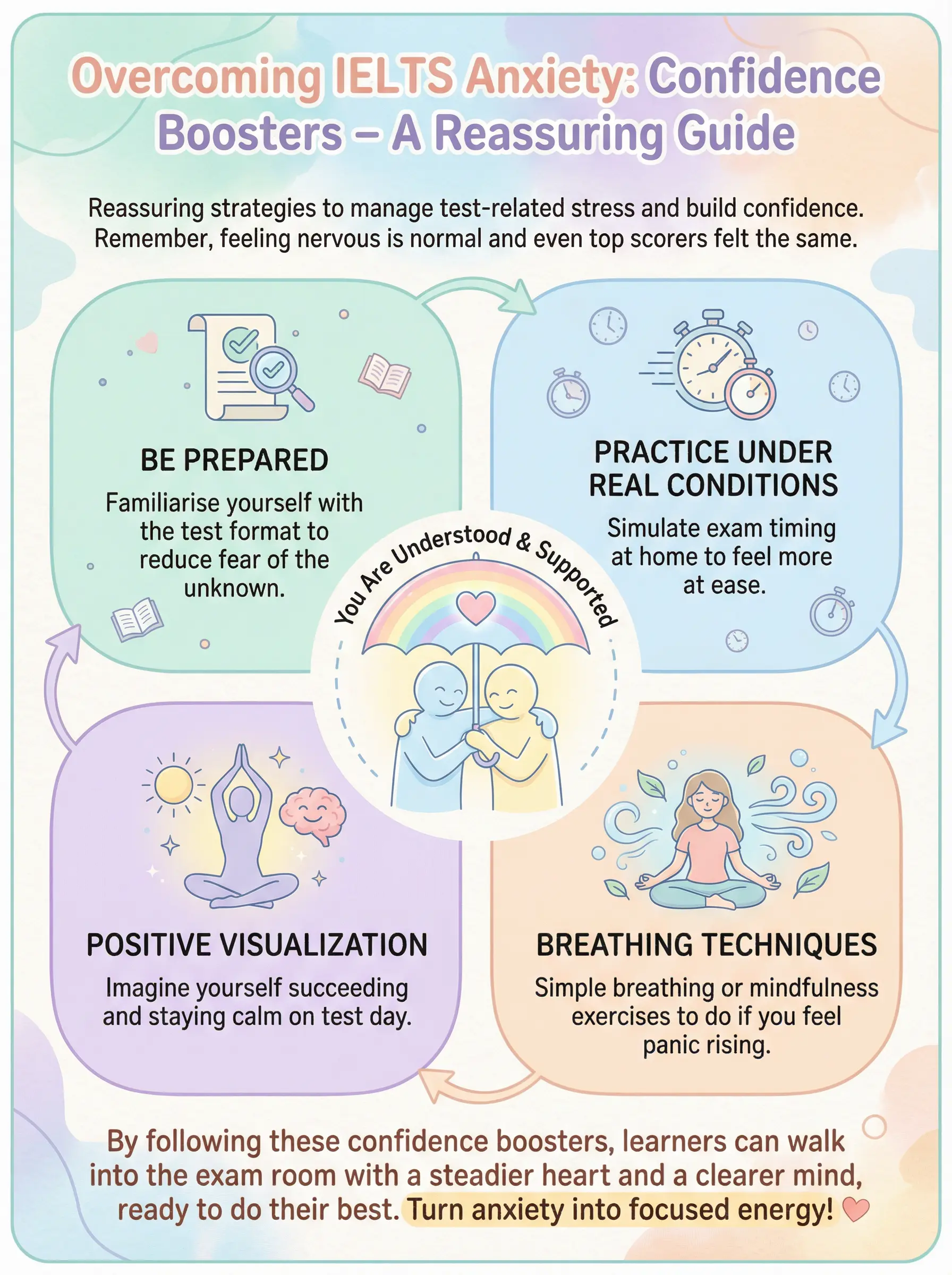
Overcoming IELTS Anxiety: 5 Proven Confidence Boosters
Overcoming IELTS Anxiety: Confidence Boosters
It’s 8:00 AM on test day. Your palms are sweating, your heart is racing, and suddenly, you can’t remember a single English word. Sound familiar? Test anxiety is a common challenge for IELTS candidates, and it can negatively impact your score even if your English is excellent.
Success in the IELTS exam depends on more than just language skill; it requires a strategic approach to mental preparation. Here are 5 proven confidence boosters to help you overcome anxiety and perform at your best.
1. Preparation is the Ultimate Antidote
Confidence comes from competence. The biggest source of anxiety is the fear of the unknown.
- •Know the Format: Familiarize yourself with every question type. Nothing on the test should surprise you.
- •Mock Tests: Simulate test conditions at home. Use a timer. Write with a pencil. The more you practice under real conditions, the less scary the real test will feel.
2. Physical Techniques for Calm
Your body and mind are connected. If you can calm your body, your mind will follow.
- •Breathing Techniques: If you feel panic rising, try the "4-7-8" technique. Inhale for 4 seconds, hold for 7, and exhale for 8. This physically forces your heart rate to slow down.
- •Sleep: Do not cram the night before. A tired brain is an anxious brain. Aim for 8 hours of sleep to ensure cognitive sharpness.
3. Positive Visualization
Top athletes use visualization to win medals; you can use it to get a Band 7+.
- •Visualize Success: Close your eyes and imagine yourself walking into the exam room calmly. Imagine opening the booklet, understanding the questions, and writing the answers fluently.
- •Reframe Nervousness: Tell yourself "I am not nervous; I am excited." Physiological signs of excitement and nervousness are almost identical. Reframe the energy as fuel for your performance.
4. Focus on the Process, Not the Outcome
Anxiety often comes from worrying about the result ("What if I fail? What if I don't get into university?").
- •Stay Present: During the test, don't think about the score. Focus entirely on the question in front of you. If you miss a question in Listening, let it go immediately and focus on the next one. Worrying about the past question will make you miss the next three.
5. The Speaking Test: It’s Just a Chat
The Speaking section is often the most nerve-wracking.
- •Human Connection: Remember that the examiner is just a person, often a teacher. They are not there to trick you; they want to hear you speak.
- •Body Language: Smile. Sit up straight. Good posture not only makes you look confident but actually makes you feel more confident.
Conclusion
Feeling nervous is normal. In fact, a little adrenaline can help you focus. The goal is not to eliminate anxiety completely but to manage it so it doesn't control you. By combining solid preparation with these mental tools, you can walk into the exam room with a steady heart and a clear mind, ready to show the examiner what you can do.
Check out our other IELTS resources and practice tests to help you achieve your target band score!
Next best action
Move from strategy to score gains with a targeted practice step.